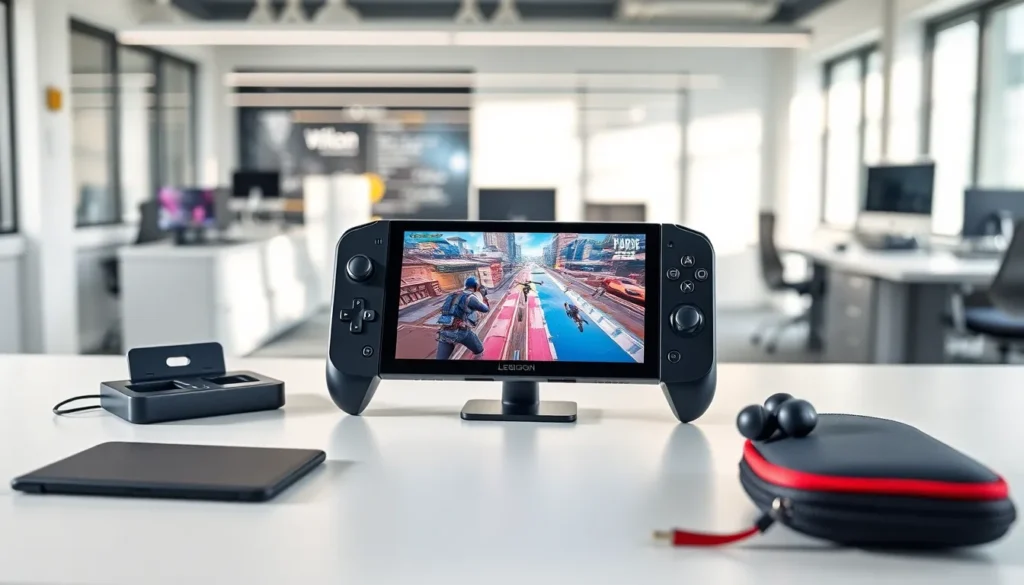

The Lenovo Legion Go trends 2026 point toward significant changes for handheld gaming PC enthusiasts. Since its 2023 debut, the Legion Go has carved out a solid position in the portable gaming market. Gamers now look ahead to see how Lenovo will respond to growing competition and advancing technology. This article covers the expected hardware upgrades, software improvements, market dynamics, and pricing shifts that could shape the Legion Go’s future. Whether someone is considering a purchase or tracking industry developments, these predictions offer a clear picture of what’s coming.
Table of Contents
ToggleKey Takeaways
- Lenovo Legion Go trends 2026 point to AMD Ryzen Z2 processors, OLED display options, and improved battery life exceeding 55Wh.
- Hall-effect joysticks and lighter materials may address common user complaints about stick drift and the device’s 854g weight.
- Software updates to Legion Space and potential Windows 11 handheld mode optimization will enhance usability on the small screen.
- Lenovo’s detachable controller design remains a key competitive advantage against Steam Deck, ROG Ally, and other rivals.
- Pricing could see a tiered approach in 2026, with base models potentially dropping to $599 and premium OLED variants reaching $749-799.
- Expanded global availability and accessory bundles will help Lenovo capture more of the projected $5 billion handheld gaming PC market.
Anticipated Hardware Upgrades and Performance Improvements
The Lenovo Legion Go trends 2026 suggest major hardware improvements are on the horizon. Industry analysts expect Lenovo to adopt AMD’s next-generation Ryzen Z2 series processors. These chips should deliver better power efficiency and stronger graphics performance compared to the current Z1 Extreme.
Display Technology
The current 8.8-inch IPS display performs well, but competitors have raised the bar. Lenovo may introduce an OLED panel option in 2026. OLED screens offer deeper blacks, faster response times, and better color accuracy. This upgrade would address one of the most common requests from Legion Go users.
Resolution could also increase. A bump from 2560×1600 to a higher pixel density would make games look sharper. But, Lenovo must balance resolution against battery life and thermal constraints.
Battery and Thermal Management
Battery life remains a pain point for handheld gaming PCs. The Legion Go trends 2026 indicate Lenovo is working on larger battery capacity, possibly 55Wh or higher. New processor efficiency gains should also extend playtime beyond the current 2-3 hour average for demanding games.
Thermal design will likely see refinement. Quieter fans and better heat dissipation would improve the gaming experience. Some leaks suggest Lenovo is testing vapor chamber cooling solutions for the next model.
Controller and Ergonomics
The detachable controllers set the Legion Go apart from rivals. Future versions may include hall-effect joysticks to eliminate stick drift, a common complaint among gamers. Haptic feedback improvements could also enhance immersion during gameplay.
Weight reduction is another goal. The current 854g weight feels heavy during long sessions. Lighter materials without sacrificing durability would make the 2026 model more comfortable to hold.
Software and Operating System Enhancements
Software plays a critical role in the Lenovo Legion Go trends 2026. The device runs Windows 11, which offers game compatibility but presents usability challenges on a handheld form factor.
Legion Space Updates
Lenovo’s Legion Space software serves as the primary interface for gaming. Expect significant updates in 2026. A redesigned launcher with faster load times and better game organization would improve daily use. Integration with cloud gaming services like Xbox Cloud Gaming and GeForce NOW should become more seamless.
The Legion Go trends 2026 also point toward better controller mapping tools. Custom profiles for individual games would save users time and frustration.
Windows Optimization
Microsoft has shown interest in optimizing Windows for handheld devices. By 2026, we may see a dedicated “handheld mode” that simplifies navigation and reduces system overhead. This would directly benefit Legion Go users who struggle with desktop-style interfaces on a small screen.
Driver updates will remain important. Lenovo’s partnership with AMD should yield more frequent optimization patches for new game releases. Quick Resume features, similar to what Xbox consoles offer, could also arrive through software updates.
Game Compatibility
The Legion Go’s Windows foundation means broad game compatibility. But, anti-cheat software and always-online requirements sometimes cause issues. Lenovo is reportedly working with game developers to ensure smoother experiences on handheld hardware.
Emulation support continues to grow. The Legion Go handles retro games exceptionally well, and improved software tools in 2026 should make setup easier for casual users.
Emerging Competition and Market Positioning
The Lenovo Legion Go trends 2026 unfold against intense competition. The handheld gaming PC market has expanded rapidly, and Lenovo faces pressure from multiple directions.
Key Competitors
Valve’s Steam Deck continues to dominate market share with its Linux-based approach and lower price point. ASUS ROG Ally and its successors compete directly with the Legion Go’s Windows-based strategy. MSI Claw and other newcomers add further options for consumers.
Each competitor brings unique strengths. The Steam Deck offers superior software optimization. The ROG Ally matches the Legion Go’s specs at similar prices. Lenovo must differentiate through features, build quality, and brand trust.
Lenovo’s Competitive Advantages
The detachable controller design remains the Legion Go’s standout feature. No major competitor offers this functionality. Lenovo should lean into this advantage with improved FPS mode accessories and tabletop gaming options.
Lenovo’s global distribution network also matters. The company can reach markets where competitors struggle to maintain stock. Customer support infrastructure gives buyers confidence in their purchase.
Market Growth Projections
Analysts project the handheld gaming PC market will exceed $5 billion by 2027. This growth creates opportunities for all players, but Lenovo needs strong 2026 offerings to capture its share. The Legion Go trends 2026 suggest the company understands this urgency.
Predicted Pricing and Availability Changes
Pricing decisions will shape the Lenovo Legion Go trends 2026 significantly. The current model launched at $699, positioning it as a premium option.
Price Expectations
Component costs have decreased since 2023. AMD’s newer processors cost less to manufacture at scale. Display technology has also become more affordable. These factors could allow Lenovo to maintain the $699 price point while adding features, or potentially drop to $599 for a base model.
A tiered approach seems likely. Lenovo may offer multiple configurations: a standard model around $599-649, and a premium variant with OLED display and expanded storage near $749-799. This strategy would compete effectively across different buyer segments.
Regional Availability
The Legion Go initially launched in limited markets. By 2026, expanded availability should reach more regions across Asia, Europe, and South America. Local pricing and support infrastructure will determine success in these markets.
Bundle Options
Lenovo may introduce bundle deals that include carrying cases, additional controllers, or docking stations. These packages add value for buyers and increase average transaction amounts for Lenovo. Gaming accessory bundles targeting specific genres, like racing or fighting games, could attract dedicated fans.